Search
Grantees
Restoring Wetlands for Climate Resilient Ecosystems and Communities (Netcare)
In Meru County, wetlands face a multitude of challenges, including deforestation in their catchment areas, encroachment for agriculture, settlement, and industrial development, the spread of invasive and alien species, and improper land use planning. These factors have had detrimental effects on the vital regulatory functions of wetland ecosystems. However, wetland restoration emerges as a potent solution, serving the dual purpose of climate change adaptation and mitigation. This underscores its pivotal role in addressing climate change impacts while simultaneously addressing their root causes, rendering it an invaluable strategy in climate resilience planning.
With support from the Climate Justice Impact Fund for Africa (CJIFA), a local community-based organization named NETCARE embarked on a mission to bolster community and ecosystem resilience and enhance adaptive capacity in the face of current climate variability and future climate change. Their approach involved sensitizing the community about the critical importance of protecting, conserving, and restoring nature and ecosystems, thereby improving the conservation of water catchment areas and subsequently enhancing rural livelihoods.
Over a span of nine months and CJIFA funding enabled the gave rise to the following community initiatives:
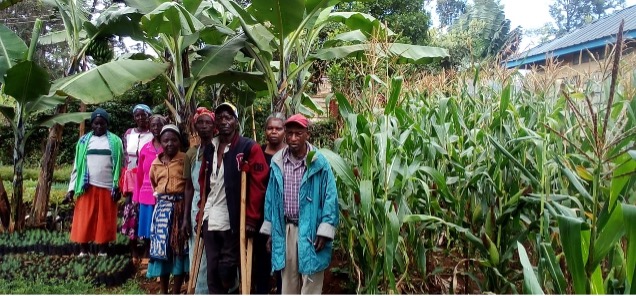
- Establishment of a demonstration farm on an 8th of an acre to facilitate training sessions;
- Training of more than 300 community members, primarily women and youth groups, in techniques for crop cultivation, especially crucial in the context of increasing droughts;
- Active participation of youth in tree planting activities, often organized around sporting events; and
- Facilitation of engagement opportunities with a diverse range of stakeholders.
These efforts yielded early outcomes, including:
- The establishment of a growing movement involving over 20 women community-based organizations (CBOs) and 15 schools, all actively engaged in tree planting and monitoring;
- The initiation of increased wetland restoration activities by the community, resulting in the restoration of over 20 wetlands through the planting and nurturing of more than 100,000 trees of different species;
- Influencing policy change, as evidenced by the Meru County Government's adoption of a policy statement to fence all wetlands within the county. Already, five wetlands in the region have been successfully fenced as a consequence; and
- Forged partnerships for long-term sustainability, with more than five collaborations formed with strategic partners such as the Kenya Forest Service (KFS), Kenya Wildlife Service (KWS), National Environment Management Authority (NEMA), SDG Kenya Forum, and the Meru County Government.
The support from CJIFA has ignited a nascent but dynamic movement poised to drive wetland restoration forward beyond the current sites. Given the tangible policy impacts achieved thus far and the solid partnerships established in the project's catchment area, there is a promising prospect that more extensive wetland areas and their extensive catchments will be conserved.
This, in turn, will progressively restore critical ecosystem functions, including flood regulation, increased water supply, local temperature control, and enhanced carbon sequestration.