
Search
Cohort 1
Fruit trees for enhanced community resilience and livelihoods (RESEED)
Adopt and Nurture Fruit Tree Initiative to Enhance Environmental Conservation and Livelihood
Kenya is currently recovering from its most severe drought in over four decades, causing socio-economic losses estimated to range between 3-5% of the GDP. In response, President William Ruto has launched the National Tree Growing and Restoration Campaign, aiming to plant 15 billion trees by 2032, a move aimed at: reducing greenhouse emissions, stopping and reversing deforestation and, restoring 5.1 million hectares of deforested and degraded landscapes through the African Landscape Restoration Initiative which was launched on 22nd December 2022. This initiative urges every individual residing in Kenya to plant 30 trees annually, totaling 300 trees per person over the course of 10 years (from 2022 to 2032). As a result, this program is being implemented across all 47 counties nationwide, mobilizing various stakeholders including community groups, NGOs, schools, churches, farmers, and others to actively participate by establishing tree nurseries and planting trees in their respective compounds and forests.
Guided by the initiative to combat climate risk through local tree planting and forest preservation, RESEED, with a EUR 5000 grant from CJIFA, endeavored to uncover optimal methods and inventive approaches where climate change and poverty intersected in Kisumu County, Nyakach Sub- County, Katito area.
This entailed prioritizing sustainable livelihoods and environmental conservation via collaborative efforts among stakeholders. The primary goal of these endeavors was to counteract deforestation, alleviate poverty, and enhance the overall welfare of the region through well-informed interventions and tree-planting projects, with the potential for replication nationwide.
The group’s approach to scaling up was multifaceted and strategically designed to maximize their impact. They recognized the importance of various factors, including ecological mapping and matching of species, as well as the invaluable insights provided by the predicted climate information from Kenya Meteorological Department (KMD). Furthermore, they placed significant emphasis on leveraging the climate predictions offered by KMD. This information informed their scaling-up strategy by providing critical insights into expected changes in weather patterns and climate conditions. It enabled them to adapt and respond proactively to potential challenges posed by climate variability. This forward-thinking approach ensured that their fruit tree planting initiative remained resilient and well-suited to the evolving climate, enhancing its long-term success.
The specific activities carried out included:
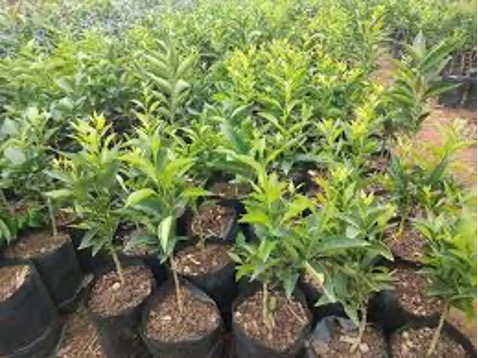
- The creation of tree nurseries and the distribution of more than 2000 fruit tree seedlings to local communities.
- The identification and training of 15 women's groups in sustainable livelihood practices, including those related to forest conservation.
- They launched environmental clubs in three schools with the aim of raising students' awareness of forest conservation as a vital measure against climate risk.
Thanks to these efforts, the following achievements have been recorded:
- Over 400 households enthusiastically embraced the tree seedlings, diligently caring for them to ensure a high rate of survival;
- Five women's groups in the area proactively engaged in self-sustaining practices such as kitchen gardens, water harvesting, orchards, and poultry farming, all of which contributed to enhancing household resilience to climate variability and change; and
- Three school environmental clubs and two local youth clubs were formed, each employing innovative methods. For instance, the youth clubs creatively utilized ball games as convening points for training and collection of fruit tree seedlings for planting on their farms.
Important lessons learned include:
- Deliberate inclusion (mainly youth and women) and sustained engagement and communication with local authorities is critical in ensuring project sustainability;
- Certain fruit tree species struggle in local soils, underscoring the importance of involving community members with local knowledge in decision-making processes.
[1] See: https://www.imf.org/-/media/Files/Publications/CR/2023/English/1KENEA2023001.ashx
[2] See: https://www.treasury.go.ke/national-tree-planting-intiative-launch/